
How do you make entry and exit decisions in trading?
As a trader, what moves you is the chart.
The chart shows you certain signals based on what you’ve learned and the trading methodology you follow, and based on that, you make a decision to either buy or sell.
Most people think that a good trader is someone who is constantly in trades…
Constant buying, selling, entering, exiting, scalping, movements, decisions…
But the truth is?
Many times, the best decision you can make in the market… is to make no decision at all. 🚫
And that’s not weakness.
Not fear.
Not hesitation.
On the contrary, sometimes it’s the highest level of professionalism.
The chart is what moves you… not your emotions.
Not Twitter — not FOMO — not the people who tell you every day where the market is going.
As a trader, what should move you is the chart.
The chart shows you specific signals based on the trading methodology you follow, and based on that you make your decisions:
Buy
Sell
Exit
Wait
But the problem is that many people treat the market as if it must produce a decision every single day.
And that’s completely wrong.
Because simply…
sometimes the chart is not telling you anything. 😶
No clear entry.
No strong confirmation.
No real edge.
And in that case, the best thing you can do is wait.
One of the biggest mistakes that makes many traders lose money is trying to force the market to give them an opportunity.
Sometimes the market is very clear.
And sometimes it’s full of noise, choppy movement, fake breakouts, and no real direction.
And during those periods:
Random entries increase.
Stops get hit more often.
Emotions start controlling decisions.
The trader begins taking any trade just because he feels like he has to do something.
Yet the most natural thing to do is to stay out of the market for a while until the picture becomes clear—and that in itself is an excellent trading decision.
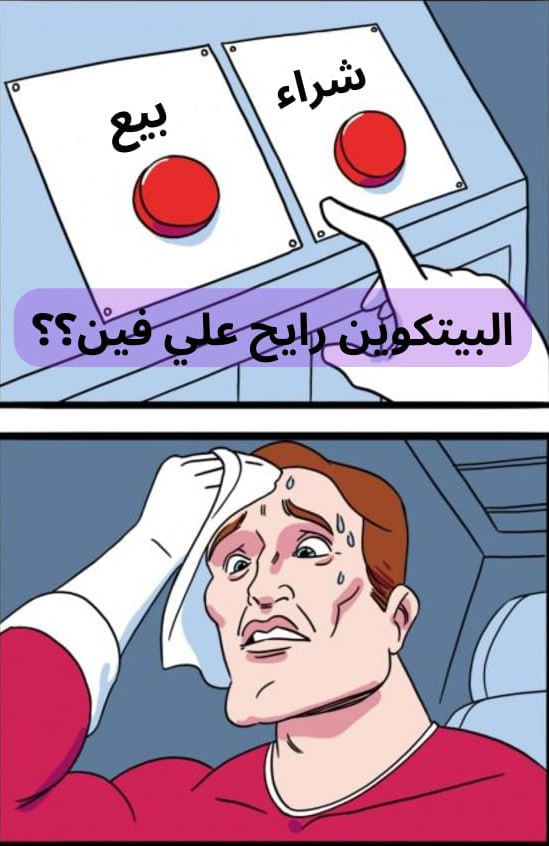
There is a type of trader who buys for very logical reasons, such as:
✅Because price reached strong zones
✅ Because the market pulled back properly
✅ Because prices became relatively cheap compared to the top
✅ Because he is accumulating in stages
✅ Because he believes in the project long-term
✅ Because he is using a DCA strategy
And all of that is completely valid
But this approach is not suitable for everyone.
You can only work this way if:
1️⃣ You have strong capital 💵
Meaning you have enough liquidity to handle continued corrections without stress or financial pressure.
2️⃣ You know how to manage your capital properly ⚖️
You understand how much to enter with, how to structure your portfolio, and you don’t over-risk.
3️⃣ You are following a clear DCA plan 📊
Meaning you buy in stages and treat the market as a relatively long-term investment, not random entries.
If you’re already planning to invest for the long term, then sometimes the process is much simpler than people think.
All you need to do is:
* Learn some basic analysis
* Understand the projects you’re investing in
* Choose strong projects
* Avoid hype and random coins
* Use a structured DCA approach
And during strong market corrections, this approach can work extremely well for many people.
But the problem is that many people:
Are not investors
Not professional traders
And don’t have proper risk management either
In the end, they go all in due to FOMO, and after the first drop, they completely break down emotionally.
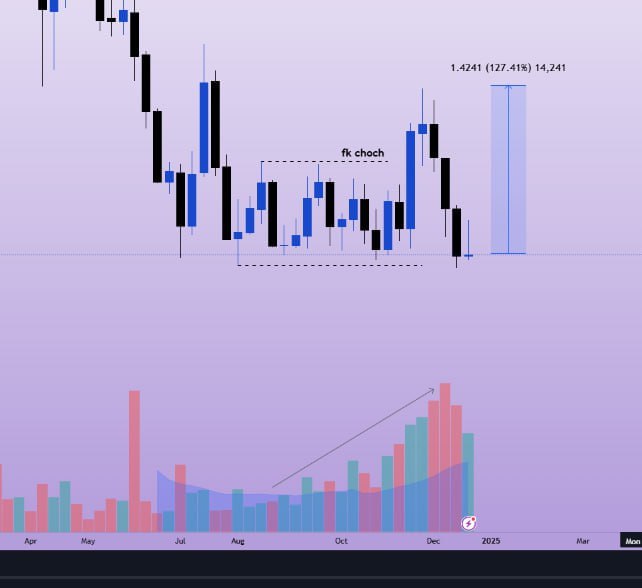
A rational entry happens when the chart gives you a clear reason—and this differs from one trader to another depending on their methodology, but the idea is the same:
You need:
Confirmation
Clear price action
A defined zone
Calculated risk
A clear plan if the market moves against you
Because the market can easily continue dropping much more than you expect.
And this is something many people don’t fully understand.
It’s a very important point.
Trust me, one of the biggest differences between traders is:
It’s the ability to wait.
To know when to:
Enter
Exit
And most importantly… when to do nothing at all
And very few people can actually do that.
Because most traders love action, excitement, and the feeling that they are “doing something”.
But the market doesn’t reward the number of trades.
The market rewards the quality of decisions.
I have full free courses on YouTube where I explain:
Technical analysis
Risk management
SMC (Smart Money Concepts)
And how to build a proper trading plan instead of randomness and FOMO
All explained in a simple, practical way that fits anyone—whether you’re a beginner or already experienced and looking to improve. 📊