
What Are RWA Assets?
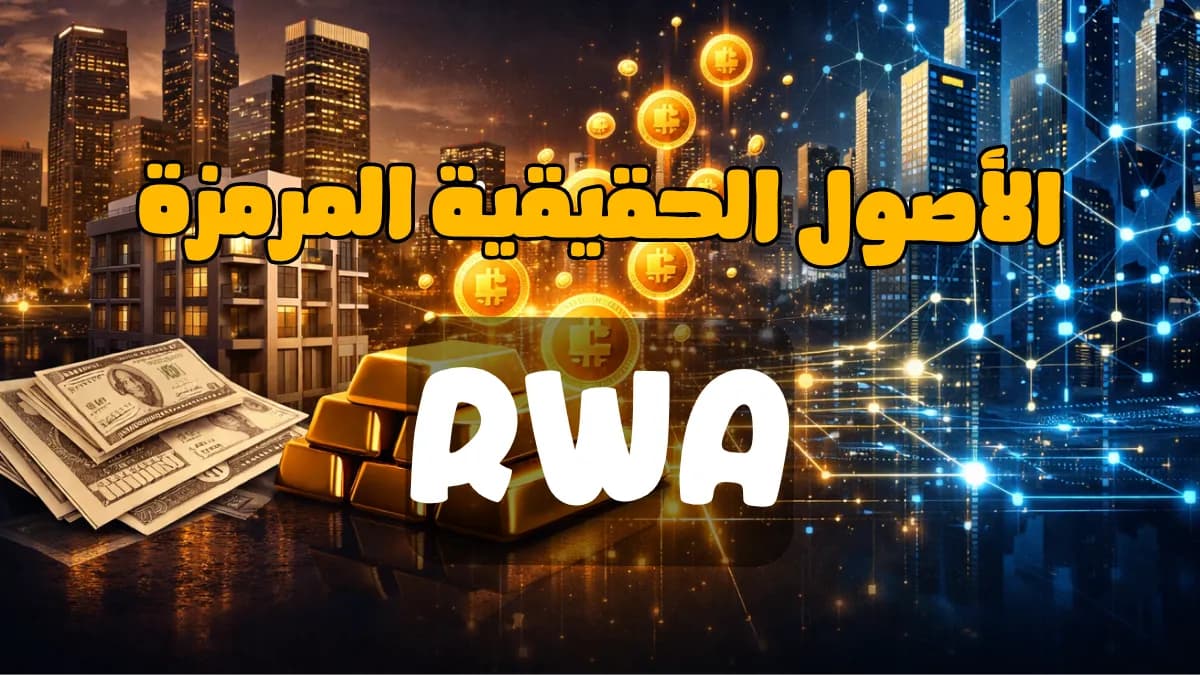
Everything You Need to Know About Real World Assets (RWA) in Crypto — Opportunities, Benefits, Challenges, and the Future of Tokenized Real Assets
What does the term RWA mean? And how is it changing the future of investing?
Did you know that real estate, commodities, stocks, and even government bonds can be turned into digital tokens on the blockchain?
RWA Definition in the Crypto World
This is Real World Assets (RWA) — real assets that have become an integral part of the world of cryptocurrencies and Web3 investments.
⭐️ What are Tokenized Real World Assets (RWA)?
Tokenized real-world assets are a digital representation of external assets that exist in the real world, tokenized on the blockchain as a tradable token.
The goal is to load these assets onto a decentralized network so they can be traded, owned in shares, have profits distributed, or be used as collateral within the decentralized finance (DeFi) system.
Simply: instead of buying an entire property or an entire art piece in the traditional market…
you can own a small part of it and sell it or buy more of it without the complications of marketing or property management.
🔑 What is the Tokenization process?
Tokenization is the process of converting the ownership rights of this real asset into a token on the blockchain.
The basic steps include:
Proving the legal ownership of the asset.
Linking real data to the asset via Oracles or trusted services.
Minting the digital tokens on the blockchain network through smart contracts.
The result?
You now own tokens that represent real value backed by an asset that exists in the real world.
Reasons RWA Matters
1️⃣ Liquidity
Traditional assets are often illiquid.
Example: a property needs months to sell… but if it is represented as a token on the blockchain?
You can sell it instantly in the market at any time.
2️⃣ Fractional Ownership
Instead of needing a huge budget to buy a house or an artwork…
now you can own just 1%, or even less, of a high-value asset and enjoy ownership rights.
3️⃣ Transparency and security
All transactions and changes in ownership are recorded on the blockchain.
This means reducing fraud, increasing trust, and full clarity of the ownership record.
📊 Market size and sector development
The RWA sector wasn’t a small dream…
In fact, the total value of tokenized assets exceeds billions of dollars, and includes bonds, real estate, commodities, and other diverse financial assets.
Market experts expect this sector may expand significantly in the coming years, and may become an important part of the structure of global digital finance.
💡 Recent examples of notable RWA projects in 2026
Examples of tokenized assets with notable market value:
1️⃣ Chainlink (LINK) - to connect real-world assets to the blockchain through Oracles
LINK plays an essential role in:
Transferring asset price data
Connecting bonds and stocks to the blockchain
Supporting decentralized finance protocols
That’s why it is one of the most important projects supporting the RWA sector.
2️⃣ PAX Gold (PAXG) – tokenized gold
Want to buy gold… but on the blockchain?
PAXG is a real example of an RWA application.
This is a very clear model of how to turn a traditional asset (gold) into a tradable digital asset.
3️⃣ Ondo Finance (ONDO)
One of the projects that focuses strongly on tokenizing U.S. bonds and traditional financial assets.
The idea here:
Bringing low-risk traditional financial instruments
into the world of DeFi
And this opens the door to new investments for investors who want relatively stable returns instead of high volatility in crypto.
4️⃣ LCX
LCX is a regulated platform focusing on issuing and trading legally compliant digital assets.
5️⃣ Reserve Rights (RSR)
RSR is a project seeking to build a stablecoin system backed by real assets.
6️⃣ Avalanche (AVAX)
AVAX isn’t a direct RWA… but it’s a very strong network that institutions use to build asset tokenization applications.
A note about value sources in RWA
📌 Keep in mind that the real sources of value in RWA aren’t ordinary speculative coins…
These are tokens that represent real assets, and are often less volatile than traditional coins.
Key challenges
Like every new technology in crypto, RWA has a set of challenges:
🏛 Regulation and law
Most governments today are working on setting legal frameworks to regulate the issuance and trading of RWA, because the assets here are linked to real ownership laws.
A recent example: China decided to tighten regulation on RWA to ensure it is subject to legal oversight, especially when issuing tokens linked to local assets.
⚙️ Technical complexities
Although smart contracts manage many tasks automatically, reliance on Oracles and integrating real data properly requires a very strong technical infrastructure.
📉 Market adoption and infrastructure
So far, the sector is still in growth stages, especially on the Libyan and financial side. However, global demand is increasing, especially from large institutions.
Future outlook
RWA isn’t just a passing idea.
Many analyses expect that representing traditional assets on the blockchain could be a bridge between traditional finance and DeFi.
That means:
✔️ The ability to invest in real estate without a huge minimum
✔️ Owning a share of government or institutional bonds
✔️ More liquidity and financial performance
✔️ Opportunities for individual investors like you
🧠 Bottom line
RWA is the future of the digital market… not as a replacement for traditional finance, but as a real bridge that connects the two worlds together.
The core idea is simple:
Real assets that were difficult to trade have now become possible for everyone — divisible, transparent, and highly liquid.
✨ Your opinion—and when do you start investing in RWA?
The RWA sector could become one of the most important structural shifts in digital finance over the coming years.
If you want to stay ahead of the trend not chase it follow Mr. Bebo here:
🔹 X (Twitter)
https://x.com/ixbebo
🔹 YouTube – In-depth market analysis
https://www.youtube.com/@WolfCharts
🔹 Telegram – Real-time updates & insights
https://t.me/wolfcharts
Stay ahead of the market. Don’t follow the noise.