
The Most Common Scams in Financial Markets
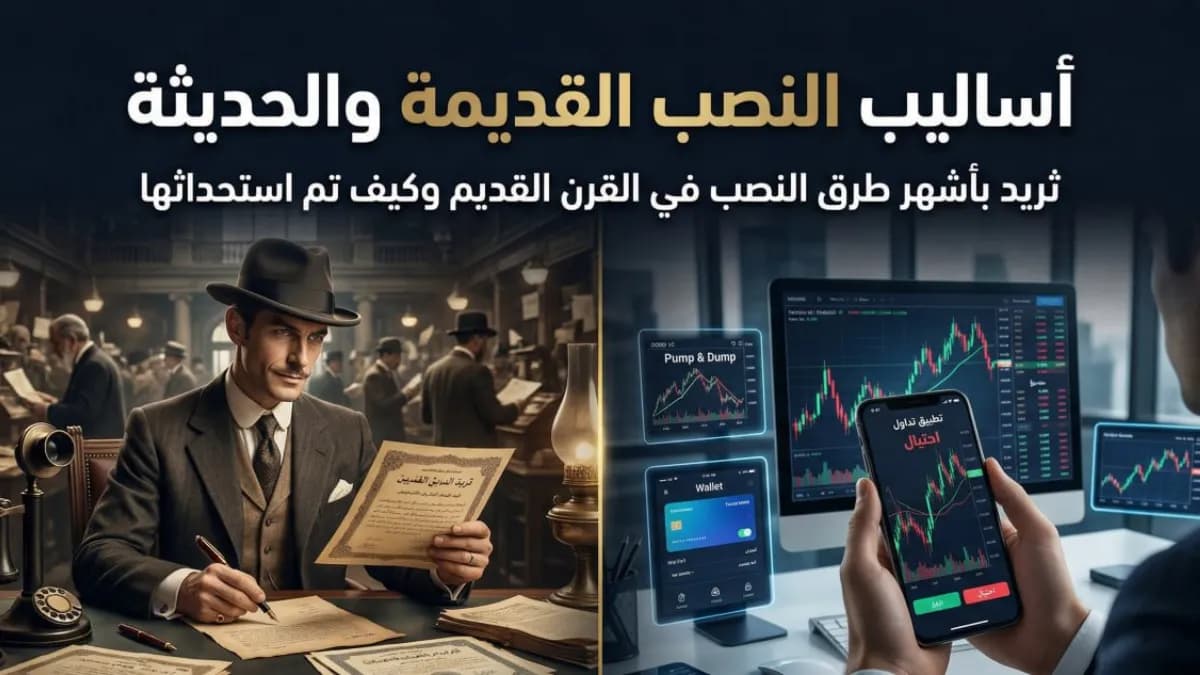
Back in the good old days... and the scams we pray God keeps us away from 😄
Let's go back a little and talk about some of the most famous old-school scams in financial markets.
Before crypto, TikTok scammers, meme coins, Lamborghini flexing, and all the circus we see today.
The interesting part is that the same scams are still being used to this day—they just come in newer packaging and a slightly different appearance.
But the core idea is exactly the same, and the victim is usually the same too:
Someone chasing easy money or entering the market without enough knowledge and awareness.
Let me walk you through it step by step and show you how people were scammed back then—and how the exact same game is being repeated today under new names and new labels.
In the early 20th century, a man named Charles Ponzi came to people with a simple promise:
*"Give me your money, and I'll give you huge profits in a very short time."*
And because people tend to chase high returns, many believed him—especially after seeing others actually receiving money and making what looked like incredible profits.
But the truth was that there was no real investment at all. 🤡
He simply took money from new investors and used part of it to pay the older investors, creating the illusion that the business was successful and generating profits.
In reality, it was nothing more than an illusion built on recycling money. ♻️
And this isn't just an old historical story.
It's essentially the spiritual father of most financial scams that appeared afterward.
Anytime someone promises:
✅ Fixed returns
✅ No risk
✅ 100% guaranteed profits
You're probably looking at a modern version of a Ponzi scheme—even if it's dressed up as crypto, called DeFi, or marketed as an "Earn" program.
We've seen this happen repeatedly in the crypto world. A project offers unbelievable yields, investors rush in chasing the returns, and then a negative event hits, the token price collapses, and the late investors are left holding the bag.
The pattern is always the same:
Attraction → Distribution → Losses
Different packaging, same game.
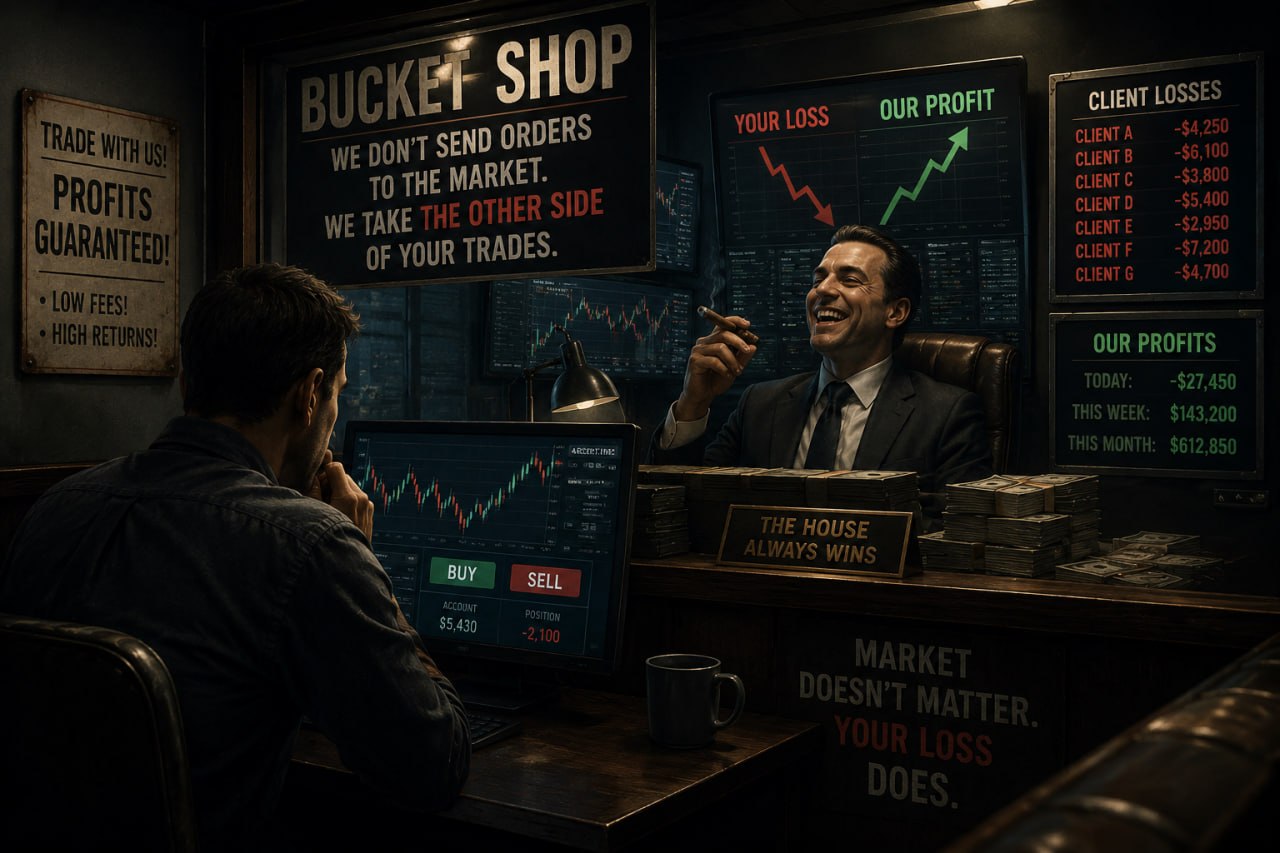
In the late 19th and early 20th centuries, there were places that made people believe they were trading in the market, when in reality there was no real trading taking place at all. 🧐
You would enter a trade, but your money never actually reached the market. In practice, you were simply betting against the shop itself—a casino. 🎲
That meant if you lost, they won. And if you won, they lost.
Naturally, they had every incentive to make sure you ended up losing in the long run (modern futures markets are often cited as a similar example by critics). 🚸
Manipulation could occur through prices, execution, spreads, and countless other details that turned the whole experience into a game where the odds were heavily stacked against the customer from the start.
This was one of the oldest forms of fraudulent trading platforms, and today it has evolved into newer—and arguably even worse—versions.
The name has changed.
The interface looks more professional.
Some even promote themselves using buzzwords like artificial intelligence, smart analytics, and advanced predictions.
But at the end of the day, you're still entering a system whose interests may be directly opposed to yours.
Here, a group of big players or “whales” would agree to buy a specific stock in large quantities.
After they accumulate a good position, they start gradually pushing the price up. Along with that rise, the “marketing machine” kicks in: news, rumors, articles, media coverage—everything used to make people believe the stock is going to the moon. 🚀
Retail traders enter late after seeing the price go up. As it continues rising, they get more excited and start buying even more.
At the right moment, the big players sell their positions to them, while regular investors are left holding the stock and paying the price of greed and late entry.
This is essentially the same concept as Pump & Dump we know today 🤡
But before social media like Twitter and TikTok…
The manipulation was done through newspapers.
Today, the tools are different: TikTok, X (Twitter), Telegram, and meme coins with emotional or regional branding (like “MECCACOIN” or “Gulf Coin”), often priced with so many zeros that people feel like they are buying something “cheap” with the potential for 100x gains—while in reality, it's just the same trap repeating in a modern form.
This is one of the tricks that has survived for many years and is still used today, just in a more modern form.
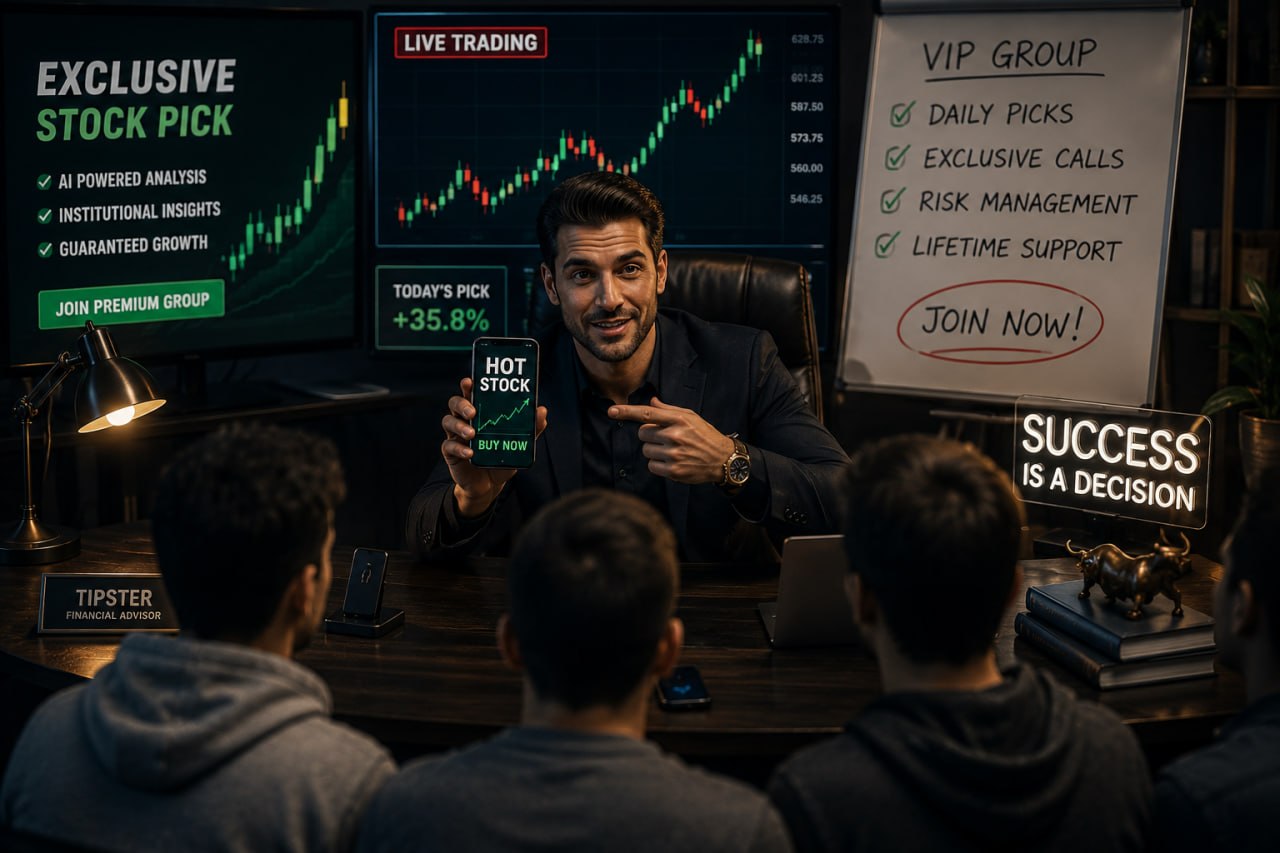
The idea was never simply about someone saying “this stock will go up” and leaving it at that. Instead, it was based on the fact that technical analysis is fundamentally a probability-based field, which means every signal naturally has only two outcomes: either it wins or it loses.
And from there, some people built their entire business model around this concept 🚸
They would issue signals continuously, and whenever some of them worked out, they would highlight only the winning ones. At the same time, they would rely on those successful cases to build credibility, letting the people who profited from their calls promote them and spread their reputation.
As for those who lost money or found the analysis unreliable, they simply didn’t matter—as long as another group was convinced they were dealing with a genius.
Over time, the traders who happened to benefit from a correct call would turn into free marketing tools, helping attract new victims for years.
That’s why paid signal services were not always a sign of real expertise or genuine education. In many cases, they were just a way to collect subscriptions and build a reputation based on selective results.
There is a huge difference between someone who teaches you how to think, and someone whose entire goal is to make you blindly follow signals and believe that this is professionalism.
There is even an episode by “El Daheeh” that discusses this exact idea in detail, explaining how trading—being a probability-driven field—can be easily exploited for scams when misunderstood.
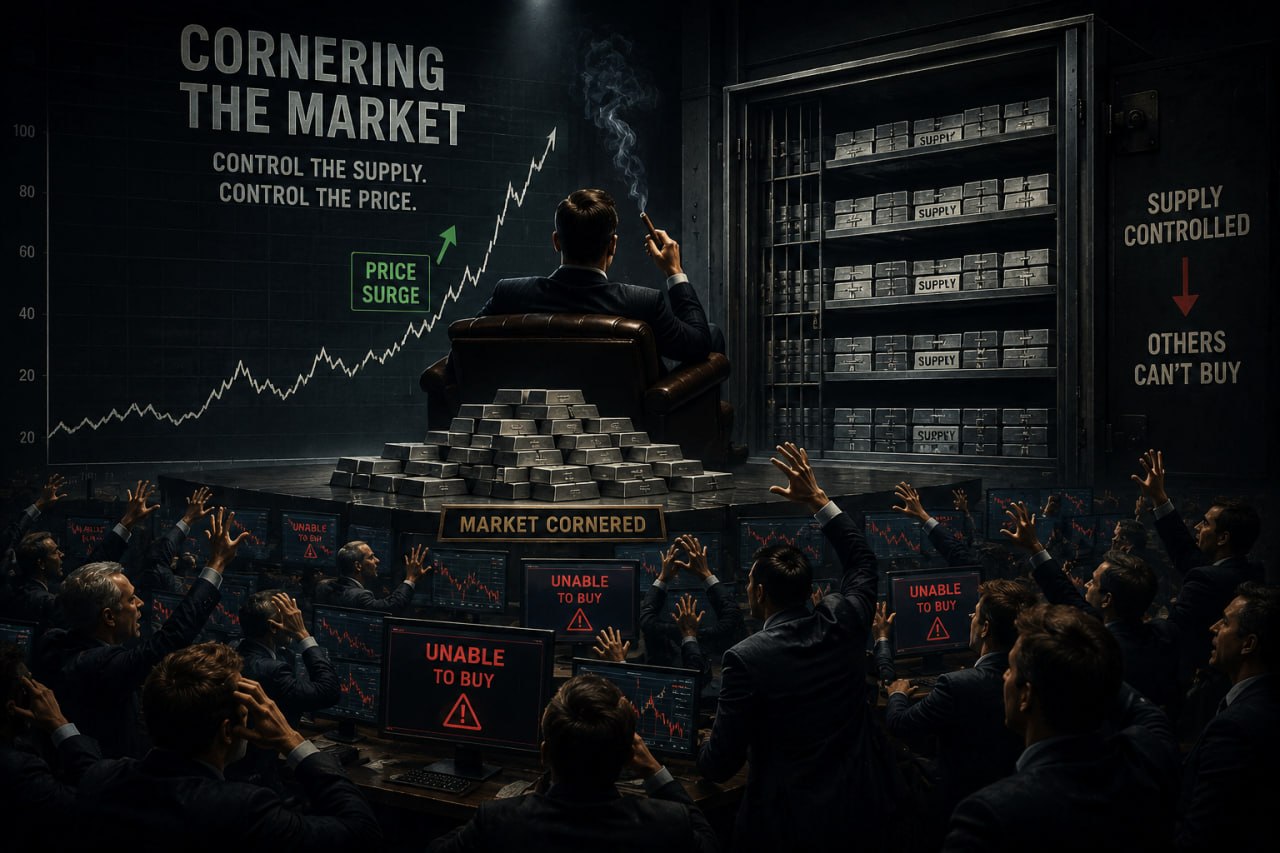
When an entity or group controls most of the supply of a certain asset, they can almost completely control its price.
This makes the market look normal from the outside, but inside the game is effectively controlled by a very small number of players.
One of the most famous examples of this was the attempt to corner the silver market in the 1970s, when the price skyrocketed due to a limited number of people controlling the supply.
This is the very old version of scam projects and modern-day rug pulls.
They would create a company on paper: a respectable name, big promises, an impressive-looking project, and stories designed to make people dream. Then they would sell shares to the public based on the idea that a huge future was coming.
People would buy, get emotionally attached to the hope, wait, and build expectations—only to suddenly discover that there was no real company at all, or that everything they were told had no real foundation.
The project disappears, the money disappears with it, and the victims are left realizing they were part of a story designed from the beginning to extract their money.
The modern version of this exists in many crypto projects today: catchy names, nice logos, fake communities, and unlimited promises. In the end, there is no real product and no real value.
People inside companies know the news before the rest of the market. They get access to earnings, decisions, and major developments, and they trade based on that information before it reaches everyone else.
This gave them a huge advantage, because for them the market was partially “visible,” while regular people would enter after the news had already been priced in, or after the move was basically over.
This teaches you that the market is not always equally fair. Anyone who enters without awareness of how the game works can easily be the last to know—and the first to pay the price.
If you pay attention to everything above, you’ll notice that most old forms of scams never really disappeared. They just changed shape and adapted to the modern era.
Sometimes under the name of revolutionary investments
Sometimes under “investment coins”
Sometimes under artificial intelligence
And sometimes under “don’t miss this signal” or “this crypto gem”
But in the end, scammers don’t really invent new ideas—they recycle the same tricks in a way that fits your time.
Be careful with your money, because it is your responsibility.
Don’t let a moment of greed, polished words, or comforting promises steal your hard-earned effort.
The market does contain real opportunities—but it also contains people whose entire job is to convince you that a trap is an opportunity.
And this is where you must learn to differentiate.