
BOS vs CHOCH vs Liquidity Sweep: How to Read a Break Correctly
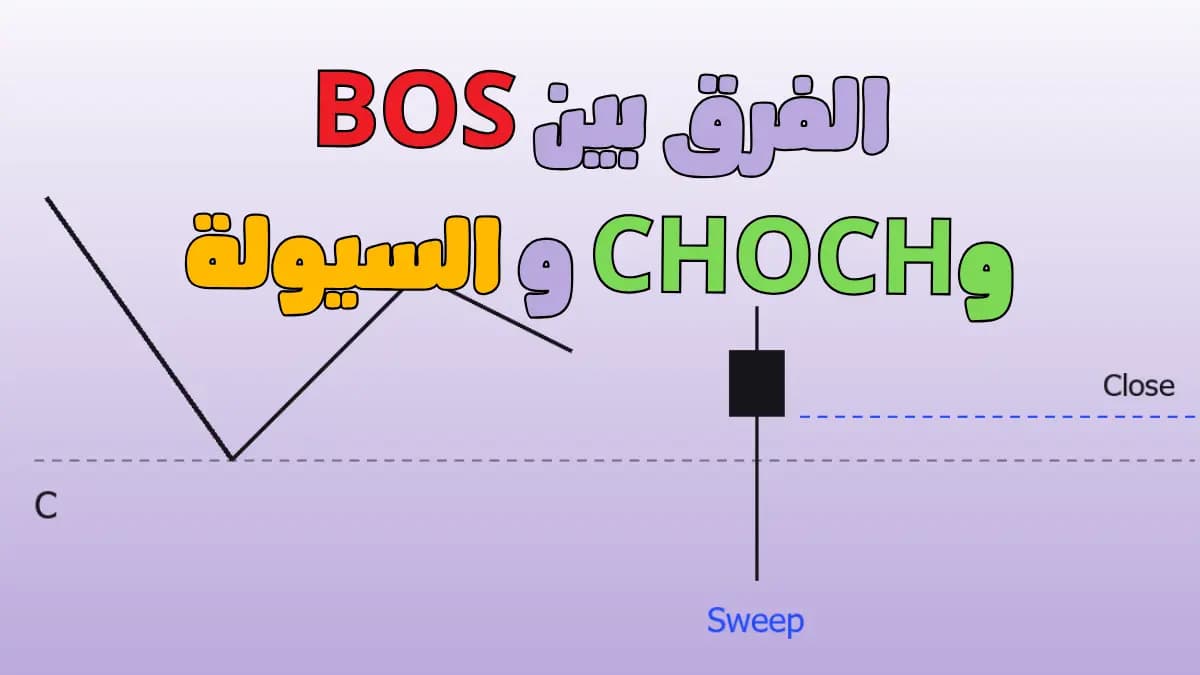
Price breaks a high, so you decide the trend has turned bullish. A little later it falls again, and you call the move a liquidity sweep.
But which high was broken: an internal high, or the strong reference high used to identify the trend? And on which timeframe?
Without those answers, it is easy to rename the move after seeing the outcome. We will follow one example and identify what has actually changed at each stage—and what is still missing.
Identify the reference before naming the break
Assume we are analysing a downtrend on one timeframe. We have a strong reference high, A, and a lower internal high, B.
The diagram assumes A has already qualified under the swing criteria taught in the lessons. A high is not strong simply because it is higher than another one. If the selection itself is unclear, review the explanation of swing highs and lows.
The distinction here is that B belongs to the internal movement, while A remains the reference for the broader structure in this example.
Case one: price breaks B, while A remains intact
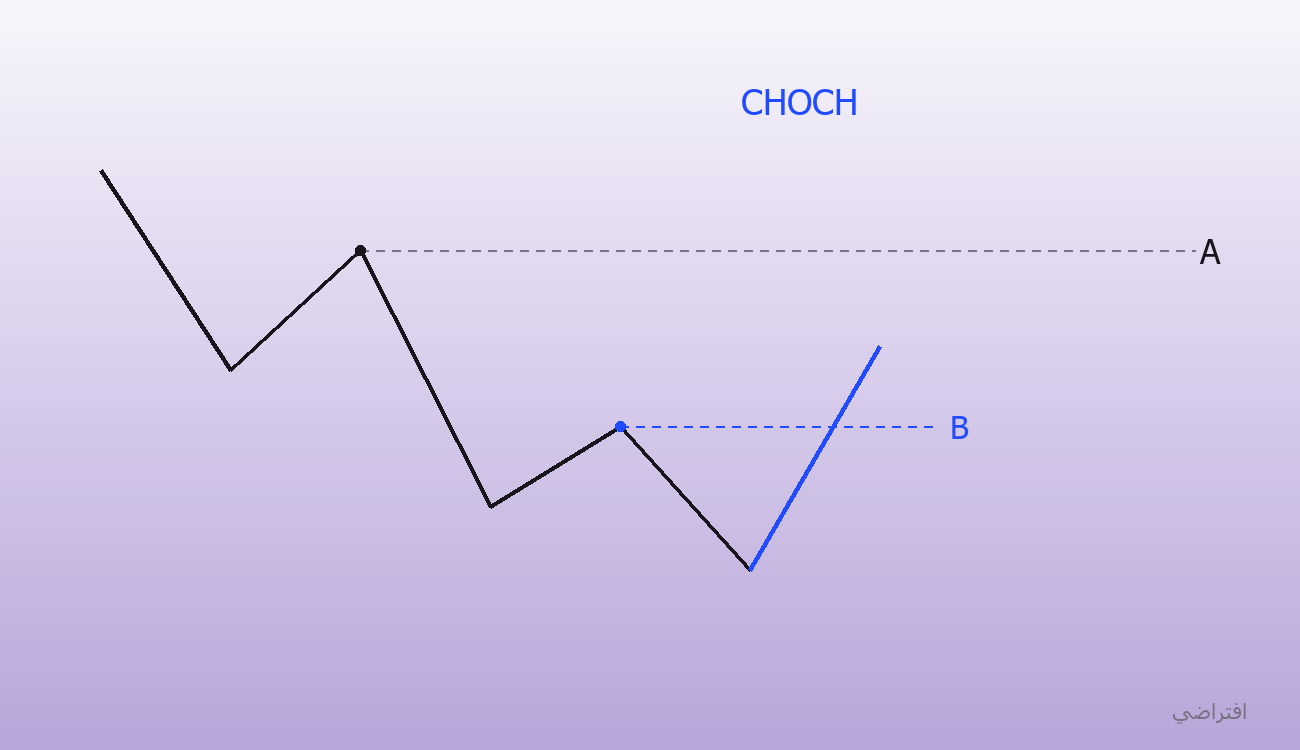
A break of the internal high does not, by itself, confirm a change in the broader structure.
Look at the blue movement. Price has passed B, but it has not broken A.
Using the terminology followed in these lessons, this is CHOCH: a change in the internal structure's character. It is new information worth following, but the break needed to confirm a change in the general trend of this timeframe has not happened yet.
Does that make the rise irrelevant? No. It alerts you to an internal change. The mistake is to assign it more meaning than it supports and declare the entire structure bullish while the reference high remains intact.
Case two: the same movement continues and breaks A
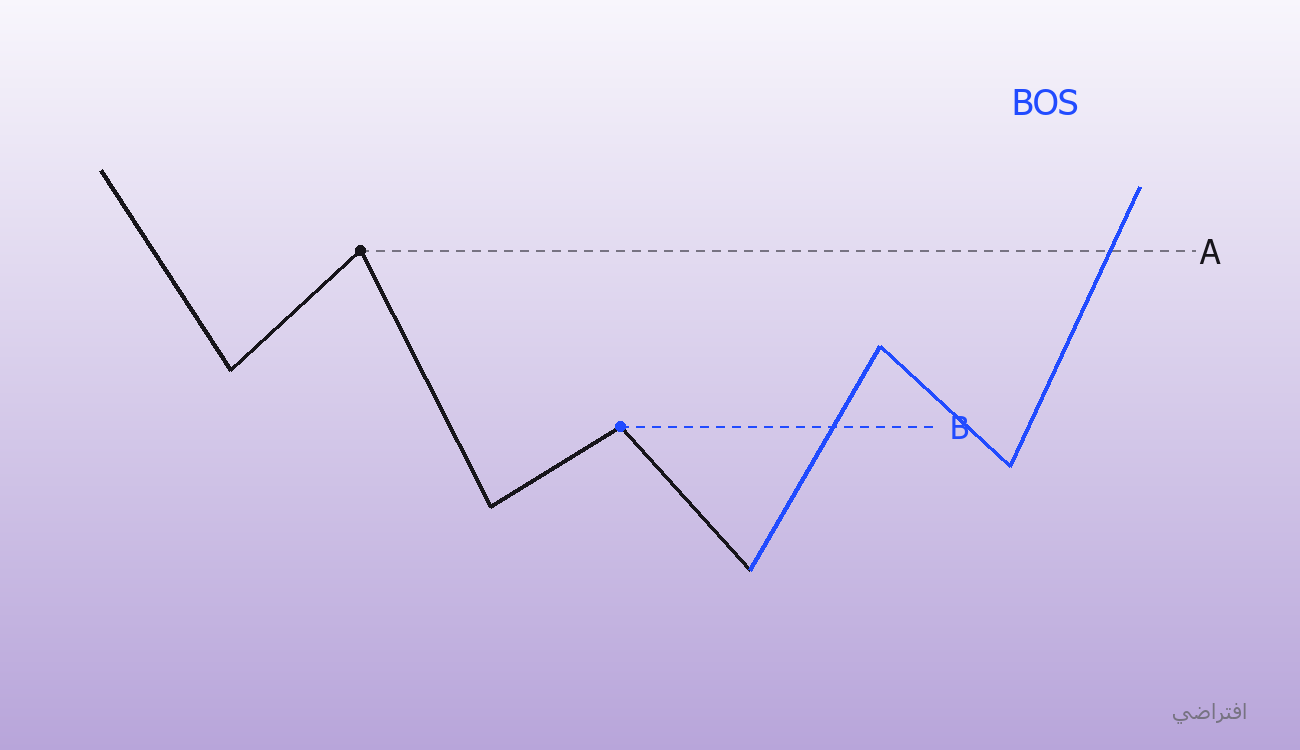
The initial structure is unchanged; the blue movement has now extended beyond A.
We have continued the same diagram with the same points. After the internal change, price pulls back and then rises beyond A.
The break now involves the reference swing itself. If it meets your model's criteria for accepting a break, we can recognise a change in the general structure in this example, rather than infer it from B alone. That is the distinction being followed here between an internal CHOCH and a BOS of the reference swing.
BOS is not a label reserved exclusively for reversals: a structure break may also occur as a trend continues. Ask which structure broke, and whether the break aligns with it or opposes it.
Breaking A is not a buy order by itself. Price location, the entry area, liquidity and the remaining setup conditions still need reviewing. Structural confirmation is part of the decision, not the whole trade.
Where does a liquidity sweep fit?
Now consider a separate close-up of the break itself at a reference low, C.
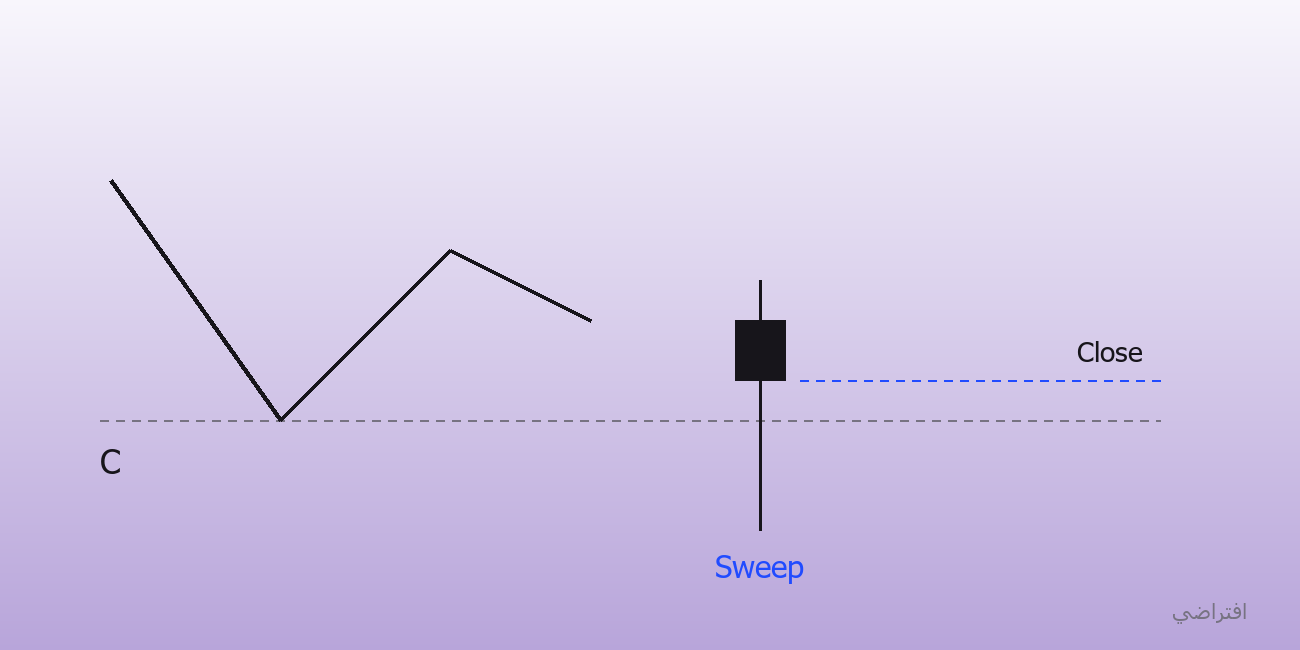
A wick below C with a close back above it in this illustrative example.
Here, price trades below C during the candle, but closes back above it. This illustrates a sweep below the low, rather than the accepted structural break we are looking for under the lesson's criteria.
Do not replace the analysis with “every wick is a sweep, and every close changes the trend.” A close above an internal high does not make that high a reference swing. The role of the level remains important even after checking the candle.
A sweep below C also does not guarantee a subsequent rise. Follow the structure that forms afterwards instead of entering on the wick alone.
The same break can mean something different on another timeframe
In the timeframe lesson, the same level may belong to the internal structure on the higher timeframe and act as a reference swing on the lower one. Saying “there was a BOS” is therefore incomplete: specify the timeframe and the structure involved.
If this still feels confusing, review multi-timeframe analysis and general versus internal structure. Mark the same level before changing timeframe so that you keep comparing the same movement.
Write your assessment before revealing the next move
Open an old chart and hide the future candles. Mark your reference and complete this sentence at the break:
“Price broke … on the … timeframe. That changed …, while I am still waiting for ….”
If it breaks an internal high, record exactly that. If it breaks the reference high and meets your criteria, record the structural change. If price only trades beyond a level and returns, record what you observed without assuming the next move.
Then advance the chart and review your selection. If you were wrong, was the problem identifying the swing, accepting the break, or transferring a lower-timeframe judgement to the higher timeframe?
The benefit is knowing which part needs review. The label BOS or CHOCH cannot fix a poorly chosen high. What matters is knowing what you are watching and what has actually happened to it.