Back
Smart Money Concept
The Difference Between Order Flow, Supply & Demand, and Order Blocks — A Simple Guide to Understanding Them Without Confusion
Many traders confuse **Order Flow**, **Supply & Demand**, and **Order Blocks**, and that can affect their entire analysis.
In this article, you'll learn the difference between them in a **simple and practical way**, with examples to help you apply each concept correctly.
2026-07-02

The Difference Between Order Flow, Supply & Demand, and Order Block
There are 3 concepts that many traders confuse with each other:
* Order Flow
* Supply & Demand
* Order Block
And the problem is that this confusion doesn't just ruin your entry...
It can ruin your entire analysis from the ground up.
So let’s break it down step by step, in a simple way, and understand what each concept actually means—and how to tell them apart easily.
* Supply & Demand
* Order Block
And the problem is that this confusion doesn't just ruin your entry...
It can ruin your entire analysis from the ground up.
So let’s break it down step by step, in a simple way, and understand what each concept actually means—and how to tell them apart easily.
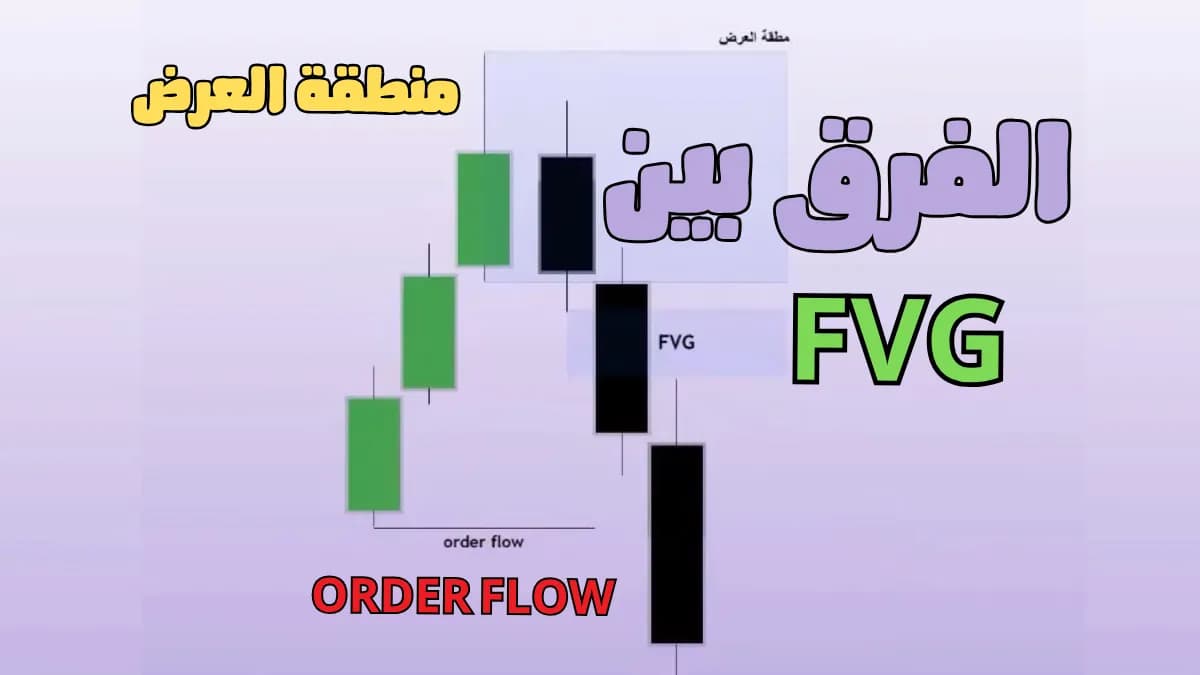
First... What Does Order Flow Actually Mean?
In simple terms...
Order Flow is the move itself.
So if the market rallied for a while and then started dropping aggressively, the entire bullish move that happened before the drop is what we call the Order Flow.
In other words...
From the first low where the move started all the way to the last high before the reversal, you're looking at the Order Flow.
It's not an entry zone.
It's not a buy or sell zone.
It simply shows you the direction of the move that happened, and helps you understand how the market was moving before the reversal took place.
And if you want to understand it in more detail, you can check this article.
Order Flow is the move itself.
So if the market rallied for a while and then started dropping aggressively, the entire bullish move that happened before the drop is what we call the Order Flow.
In other words...
From the first low where the move started all the way to the last high before the reversal, you're looking at the Order Flow.
It's not an entry zone.
It's not a buy or sell zone.
It simply shows you the direction of the move that happened, and helps you understand how the market was moving before the reversal took place.
And if you want to understand it in more detail, you can check this article.
Second... What Is a Supply or Demand Zone?
This is where many traders get confused.
If we're talking about Supply, then it's simply:
the last bullish candle before the strong drop.
It doesn't matter whether that candle was strong or weak.
It doesn't matter whether it was big or small.
As long as it was the last bullish candle before the bearish move, it is considered a Supply zone.
And the same logic applies to Demand.
It is the last bearish candle before the bullish move begins.
So the idea behind Supply & Demand is directly tied to the last candle that came right before the opposite move started.
If we're talking about Supply, then it's simply:
the last bullish candle before the strong drop.
It doesn't matter whether that candle was strong or weak.
It doesn't matter whether it was big or small.
As long as it was the last bullish candle before the bearish move, it is considered a Supply zone.
And the same logic applies to Demand.
It is the last bearish candle before the bullish move begins.
So the idea behind Supply & Demand is directly tied to the last candle that came right before the opposite move started.
Third... What Is an Order Block?
And this is exactly where many traders get it wrong.
An Order Block is not simply the last bullish or bearish candle.
That idea is incorrect, even though a lot of traders still use it unfortunately.
The real condition is this:
There must be a valid Fair Value Gap (FVG) formed after it.
In other words, the presence of the FVG is what gives that candle its significance.
And that means an Order Block can actually be:
* a bullish candle
* a bearish candle
* a Doji candle
* even a candle that swept liquidity
What matters is one thing:
👉 A real Fair Value Gap must form after it.
An Order Block is not simply the last bullish or bearish candle.
That idea is incorrect, even though a lot of traders still use it unfortunately.
The real condition is this:
There must be a valid Fair Value Gap (FVG) formed after it.
In other words, the presence of the FVG is what gives that candle its significance.
And that means an Order Block can actually be:
* a bullish candle
* a bearish candle
* a Doji candle
* even a candle that swept liquidity
What matters is one thing:
👉 A real Fair Value Gap must form after it.
Important: not every gap is automatically a Fair Value Gap (FVG)
This is one of the most common mistakes traders make.
Not every empty space on the chart is an FVG.
And just as importantly...
A wick does not count as a Fair Value Gap.
Because if you identify the wrong gap as an FVG, you'll start marking Order Blocks incorrectly—and once that happens, your entire analysis ends up built on the wrong foundation.
If you want to understand this part properly, go back and read the article: “What Are Fair Value Gap (FVG) Zones in Trading?”
Not every empty space on the chart is an FVG.
And just as importantly...
A wick does not count as a Fair Value Gap.
Because if you identify the wrong gap as an FVG, you'll start marking Order Blocks incorrectly—and once that happens, your entire analysis ends up built on the wrong foundation.
If you want to understand this part properly, go back and read the article: “What Are Fair Value Gap (FVG) Zones in Trading?”
So, When Does a Candle Actually Become a Valid Order Block?

Let’s simplify it with a few scenarios.
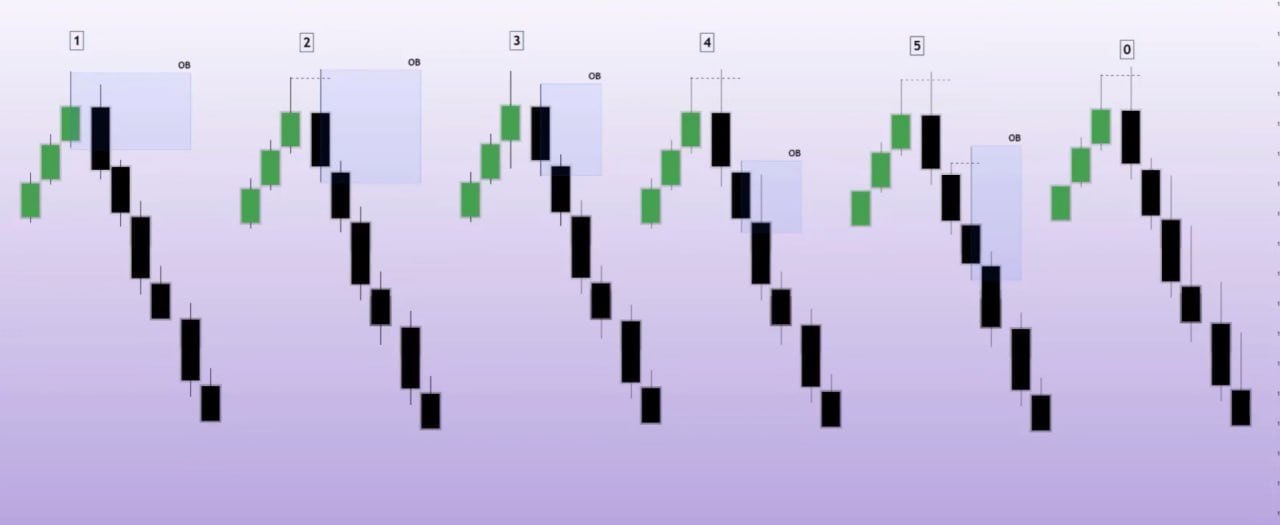
1) First scenario
You have the last bullish candle…
and right after it, a Fair Value Gap forms.
In that case, this candle is considered:
* Supply
* and at the same time an Order Block
---
2) Second scenario
You have the last bullish candle…
but no FVG forms after it.
In this case, we ignore it.
Then we look for the first candle after it that is followed by a valid Fair Value Gap.
👉 That candle is the actual Order Block.
---
3) Third scenario
The candle can be:
* bearish
* a Doji
* or even a liquidity sweep candle
As long as a valid Fair Value Gap forms after it...
👉 it is considered an Order Block.
You have the last bullish candle…
and right after it, a Fair Value Gap forms.
In that case, this candle is considered:
* Supply
* and at the same time an Order Block
---
2) Second scenario
You have the last bullish candle…
but no FVG forms after it.
In this case, we ignore it.
Then we look for the first candle after it that is followed by a valid Fair Value Gap.
👉 That candle is the actual Order Block.
---
3) Third scenario
The candle can be:
* bearish
* a Doji
* or even a liquidity sweep candle
As long as a valid Fair Value Gap forms after it...
👉 it is considered an Order Block.
What if the candle swept liquidity?
If a candle makes a new high, sweeps liquidity, and then a Fair Value Gap forms immediately after it...
then that candle is considered an Order Block.
Even if the candle itself is bearish.
And this is one of the things that surprises a lot of traders at first—but it becomes very logical once you understand that the real foundation here is the FVG, not the candle color.
then that candle is considered an Order Block.
Even if the candle itself is bearish.
And this is one of the things that surprises a lot of traders at first—but it becomes very logical once you understand that the real foundation here is the FVG, not the candle color.
When Does an Order Block Become Invalid?
Not every Order Block stays valid forever.
There are cases where it becomes invalid.
The most important one is this:
If the candle that comes after it fully fills the Fair Value Gap, or takes out its liquidity, then the Order Block is considered invalid.
And in that case...
we start looking for a new Order Block that meets the proper conditions.
There are cases where it becomes invalid.
The most important one is this:
If the candle that comes after it fully fills the Fair Value Gap, or takes out its liquidity, then the Order Block is considered invalid.
And in that case...
we start looking for a new Order Block that meets the proper conditions.
Why Do You Need to Distinguish Between the Three?
Because each concept has a completely different role.
If you treat Order Flow as an entry zone...
you’ll make mistakes.
If you mark every last candle as an Order Block...
you’ll make mistakes.
And if you mix up Supply with Order Block...
you’ll start making decisions based on two completely different concepts.
Each one answers a different question:
* Order Flow tells you: Where was the market moving?
* Supply & Demand tells you: What was the last zone before the reversal?
* Order Block shows you: Which candle was followed by the real price imbalance (FVG)?
And once each concept becomes clear in your mind, you’ll notice that:
* your analysis becomes cleaner
* your chart markings become more precise
* and your decisions become based on understanding, not just memorization.
If you treat Order Flow as an entry zone...
you’ll make mistakes.
If you mark every last candle as an Order Block...
you’ll make mistakes.
And if you mix up Supply with Order Block...
you’ll start making decisions based on two completely different concepts.
Each one answers a different question:
* Order Flow tells you: Where was the market moving?
* Supply & Demand tells you: What was the last zone before the reversal?
* Order Block shows you: Which candle was followed by the real price imbalance (FVG)?
And once each concept becomes clear in your mind, you’ll notice that:
* your analysis becomes cleaner
* your chart markings become more precise
* and your decisions become based on understanding, not just memorization.
Summary
Memorize this rule, because it’ll save you from a lot of confusion:
✅ Order Flow = the move itself.
✅ Supply / Demand = the last candle before the opposite move.
✅ Order Block = the candle after which a valid Fair Value Gap (FVG) forms.
If these three concepts are clear in your mind, you’ll start looking at the market in a completely different way.
But if they’re still mixed up...
then most likely your entire analysis will be confused from the start, even if your entry looks correct on the surface.
✅ Order Flow = the move itself.
✅ Supply / Demand = the last candle before the opposite move.
✅ Order Block = the candle after which a valid Fair Value Gap (FVG) forms.
If these three concepts are clear in your mind, you’ll start looking at the market in a completely different way.
But if they’re still mixed up...
then most likely your entire analysis will be confused from the start, even if your entry looks correct on the surface.
Bebo | Financial Markets Analyst
A financial markets analyst and trader with over 7 years of experience, offering a specialized educational approach through a comprehensive 3-level course designed to master SMC concepts. He has also developed his own methodology based on new practical concepts that improve entry points and build a more professional and profitable trading approach. Over 3 years, he has trained more than 600 students through free and paid educational content.