
How can you multiply your trading profits with a simple technique called Refinement?
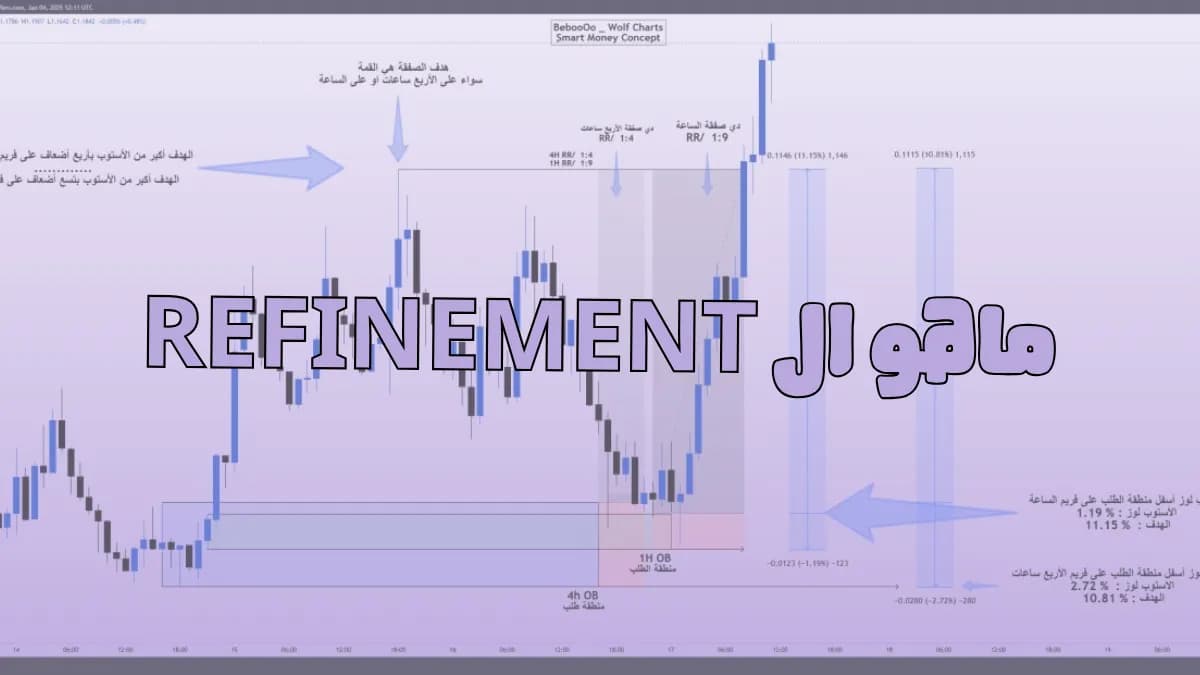
A very simple technique can increase your profits by 150% 👏
Meaning your return can become one and a half times bigger than your usual profit.
Let’s start and break the idea down in a simple way... 👇
What’s this technique?
The technique is called Refinement. 〽️®️
The idea behind it is refining your demand zones more precisely so you can reduce your stop loss and increase your Risk/Reward ratio.
A lot of traders try to do it but fail — and there’s one main reason for that, which I’ll explain at the end of the post.
Let’s start with an example:
In the first image, we identified a Demand Zone on the 4-hour timeframe.
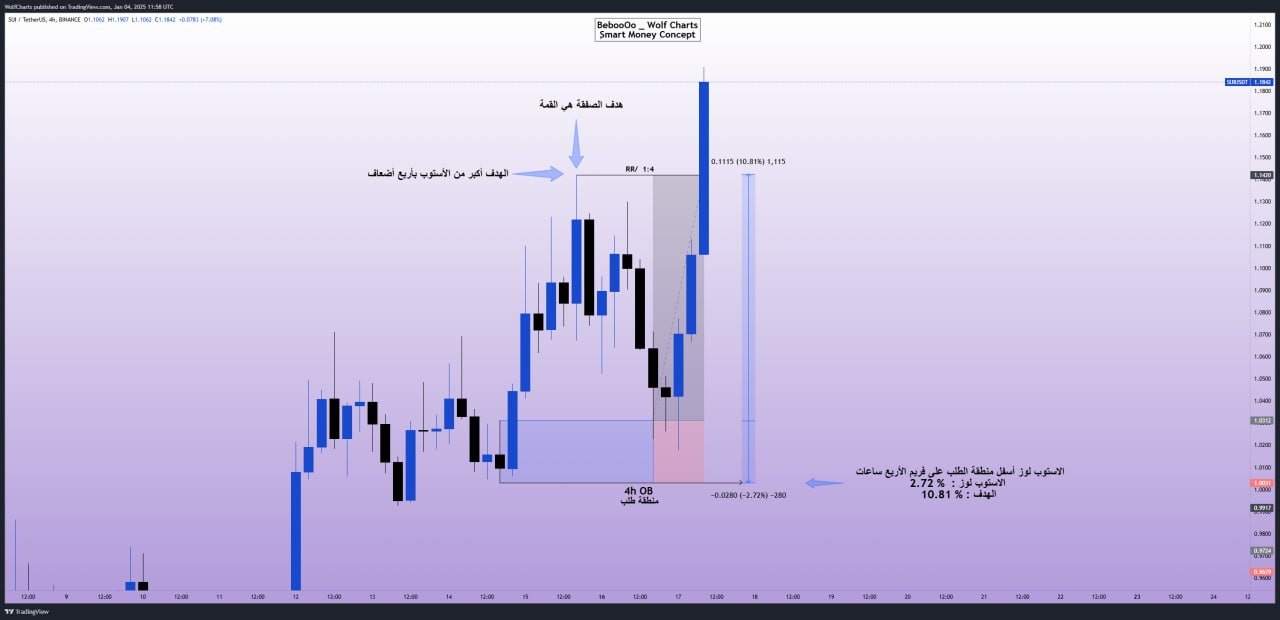
Entry point: the upper boundary of the Demand Zone.
Stop loss: directly below the Demand Zone.
Target: the previous high.
In this case:
Stop loss = 2.72%
Target = 10.81%
Risk/Reward ratio = 1:4
So:
If you enter a trade with $100
Risk: $2.5
Profit: $10
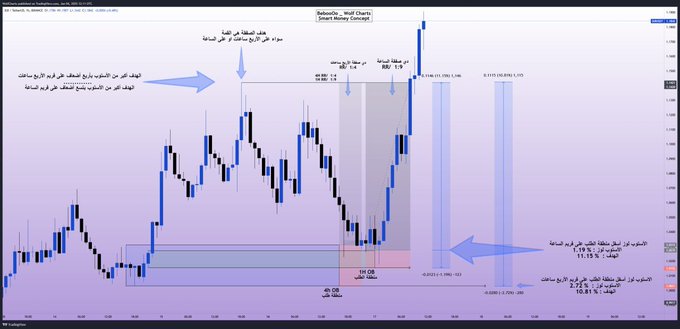
Instead of marking the Demand Zone on the 4H timeframe, drop down to the 1H timeframe and do the following:
1- Identify a new Demand Zone inside the 4H Demand Zone.
2- Adjust your entry point and stop loss based on this refined zone.
Result:
Stop loss = 1.19%
Target = 11.15%
Risk/Reward ratio = 1:9 🔥
Therefore:
If you enter the trade with $100:
Risk: $2.5
Profit: $25
So with the same risk ($2.5), your profit becomes $25 instead of $10.
Look at this picture
In this example:
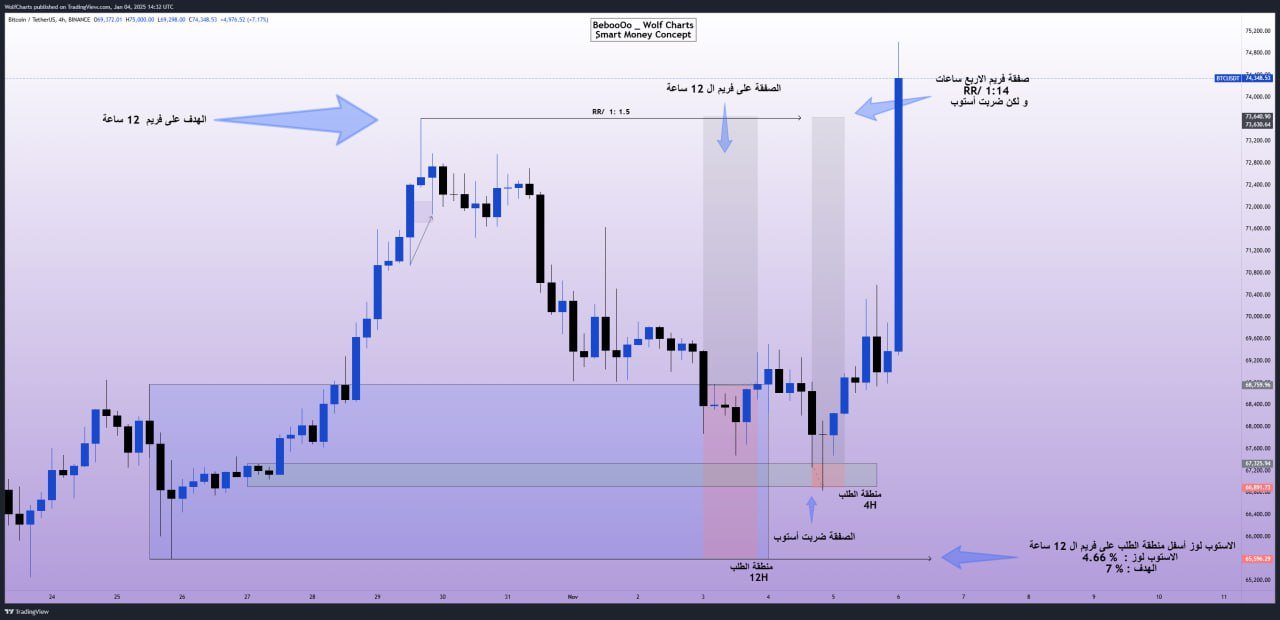
We identified a Demand Zone on the 12H timeframe.
We applied Refinement and moved down to the 4H timeframe, then entered the trade based on the smaller Demand Zone.
But the trade hit stop loss even though all conditions looked correct.
Why?
Because the stop loss was too tight and not placed in a safe area. We relied on a weaker, smaller zone instead of respecting the stronger higher-timeframe zone.
So what’s the solution I personally use? ✏️
1- I identify the Demand Zone on the higher timeframe (e.g., 12H).
2- I apply Refinement on a lower timeframe (e.g., 4H).
3- I enter based on the lower timeframe, but I place my stop loss below the higher timeframe Demand Zone (not the smaller one).
Result:
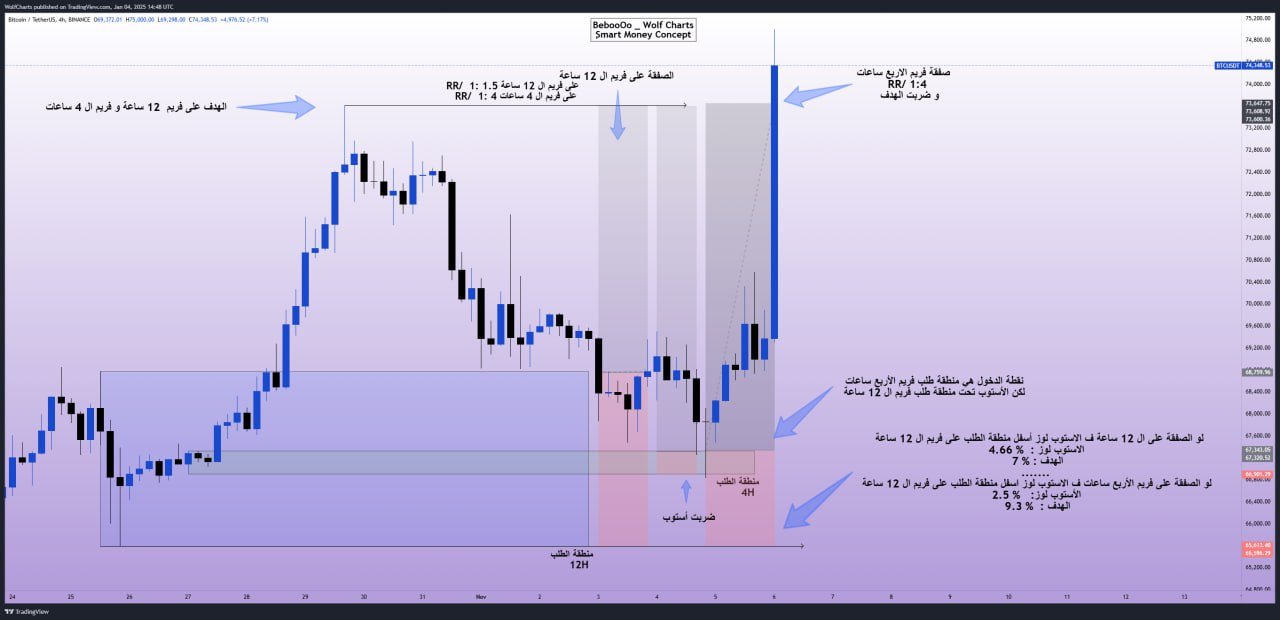
Stop loss is in a safe area. ✅
Risk/Reward ratio becomes higher. 💎
On the higher timeframe (12H): Risk/Reward = 1:1.5
With Refinement (4H): Risk/Reward = 1:4
The difference in profitability is huge.
Entering without Refinement = limited gains.
Entering with proper Refinement = higher profits and better safety. 🚀💰
📚 I tried to simplify the concept in a scientific way as much as possible, but if something is still unclear or you didn’t fully understand it, that’s normal and it may be due to a lack of knowledge about trading.
And that’s not a problem at all, but the real mistake is not trying to learn.
If you want to improve your level and understand more, send me a DM and I’ll share free courses to help you reach this level and beyond 💡.
These courses will help you:
* Achieve real and consistent profits
* Grow your portfolio in a balanced way
* Avoid scams and uncalculated risks that destroy capital
If you watched the full explanation and found it useful, don’t forget to engage with it on Twitter.
This engagement helps me spread the content further and reach more people, which in turn supports me in creating more lessons and explanations consistently.
Thank you for your continuous support 💜