
What Is Smart Money? How to Read Its Footprints on the Chart
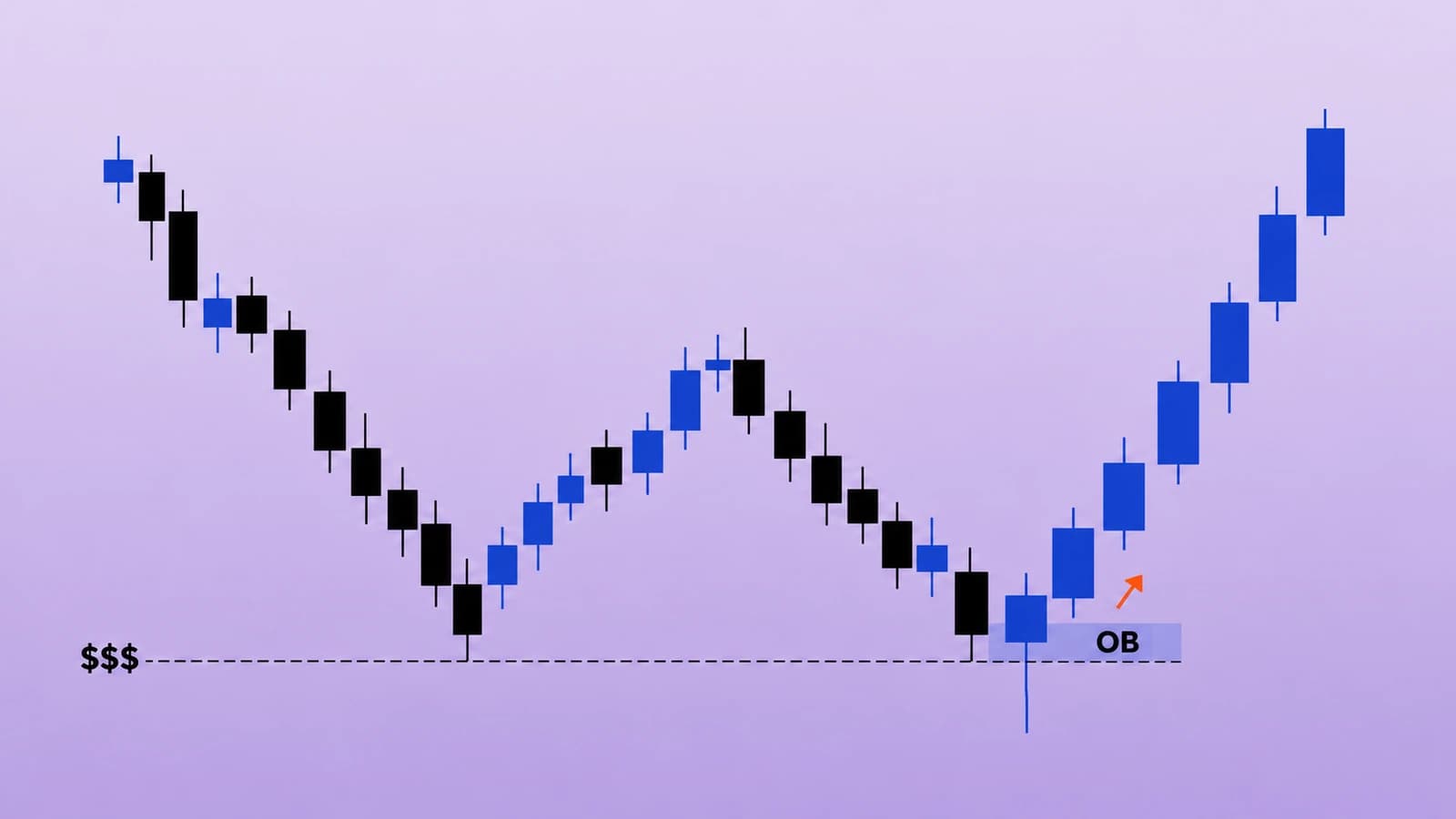
Why does price hit your Stop Loss almost to the tick… and then move exactly the way you expected?
And you start wondering: does the market know where I put my stop?
Here's the truth: you're not imagining it. And it's not a coincidence.
But the market isn't targeting you personally either. In this article, you'll learn who really moves price, why it goes to those exact spots, and how to stop being the money that gets taken.
What Is Smart Money?
Smart money is the capital of the big players: banks, financial institutions, investment funds, and whales holding billions.
They're the ones who influence price.
No matter how many trades you and I take, we won't move the Bitcoin chart. A fund coming in with a billion dollars will.
One important point: they influence price, they don't control it 100%. Nobody holds the entire asset. Their impact is big, but no one fully controls the market.
What Actually Moves the Market?
Supply and demand. Period.
That's how the price of anything is set. Heavy demand for gold pushes its price up. If everyone wants to sell, it drops.
Same with Bitcoin. Same with stocks.
And supply and demand comes down to one thing: money.
In market language, that money is called liquidity.
How Does Smart Money Take Advantage of Retail Traders?
Let's look at something we've all been through.
A classic triangle pattern. Price breaks out to the upside, the classical trader buys the breakout and puts his stop below the last low.
Price moves a bit toward the target… then comes back and hits the stop.
The trader says: the pattern failed, I'll sell. He sells and puts his stop above the high.
The result? Price takes out the second stop and keeps going up.
Two losses on the same move.
So what happened?
Everyone trading the same way placed their stops in the same spots: below the low, above the high, under the trendline.
That means a lot of money is sitting in those areas.
Smart money needs that money to fill its large positions. So price goes to take that liquidity first, then moves in its real direction.
What Does "Taking Liquidity" Mean?
Picture a fisherman. Where does he throw his net?
Not in empty water. He throws it where the fish are.
Smart money works the same way. Price heads to where stops and orders are clustered, because that's where the liquidity is.
That's why we keep repeating this rule:
The market maker hunts for liquidity.
Don't be the liquidity.
In other words, don't put your stop where everyone else puts theirs.
So What Is the Smart Money Concept (SMC)?
SMC is a school of analysis that tries to read smart money's footprints on the chart. It doesn't know exactly what they'll do, but it tries to spot the areas they're most likely to enter from.
It rests on 3 pillars:
Market Structure: Where is the market going? Up, down, or sideways. Understand it well and you understand half the market.
Liquidity: Where the money is sitting, and where price may go to take it.
Supply and demand: Areas with large buy or sell orders. In SMC we call them Order Blocks.
These three are really one thing. You can't understand one without the others, and you need to combine them to see the full picture.
Is SMC the Same as ICT?
A question that comes up a lot.
The original was the supply and demand school: demand zones, supply zones, and that's it.
Then ICT added a huge set of terms and tools, making it very powerful but very detailed.
Then SMC took part of ICT's terminology and simplified it.
So all three share the same core idea; the difference is the level of detail.
Personally, I prefer SMC because, for me, it's powerful and simple at the same time. But that's my opinion. Every school is valid, every school wins, and every school loses.
The difference isn't the school… it's how well you master it.
If you want a detailed comparison between SMC and classical analysis, read SMC vs Classical Technical Analysis: What's the Difference?
Same Zone, 3 Ways to Read It
Take one demand zone on the chart:
A supply and demand trader marks the whole zone.
An ICT trader marks a specific candle inside it.
An SMC trader marks the last candle before the strong move: the Order Block.
The smaller the zone, the tighter the stop, and the better the Risk Reward.
That's one of the main reasons many traders prefer SMC. Just remember: a better Risk Reward doesn't mean a guaranteed trade.
Is SMC Guaranteed?
No.
Nothing is certain in trading. SMC helps you understand where price is heading instead of following patterns everyone has memorized, but it loses like any other school.
What makes the difference is understanding the conditions, knowing when your idea is wrong, and respecting risk management.
The Bottom Line
The market isn't against you. It isn't targeting you personally.
The market goes to liquidity.
Once you understand where smart money looks for that money, you stop being that money, and you start moving with them instead of against them.
If you want to start SMC the right way, begin the learning path on our website and assess your level first, or watch the full Smart Money Concept diploma on the WolfCharts YouTube channel.